
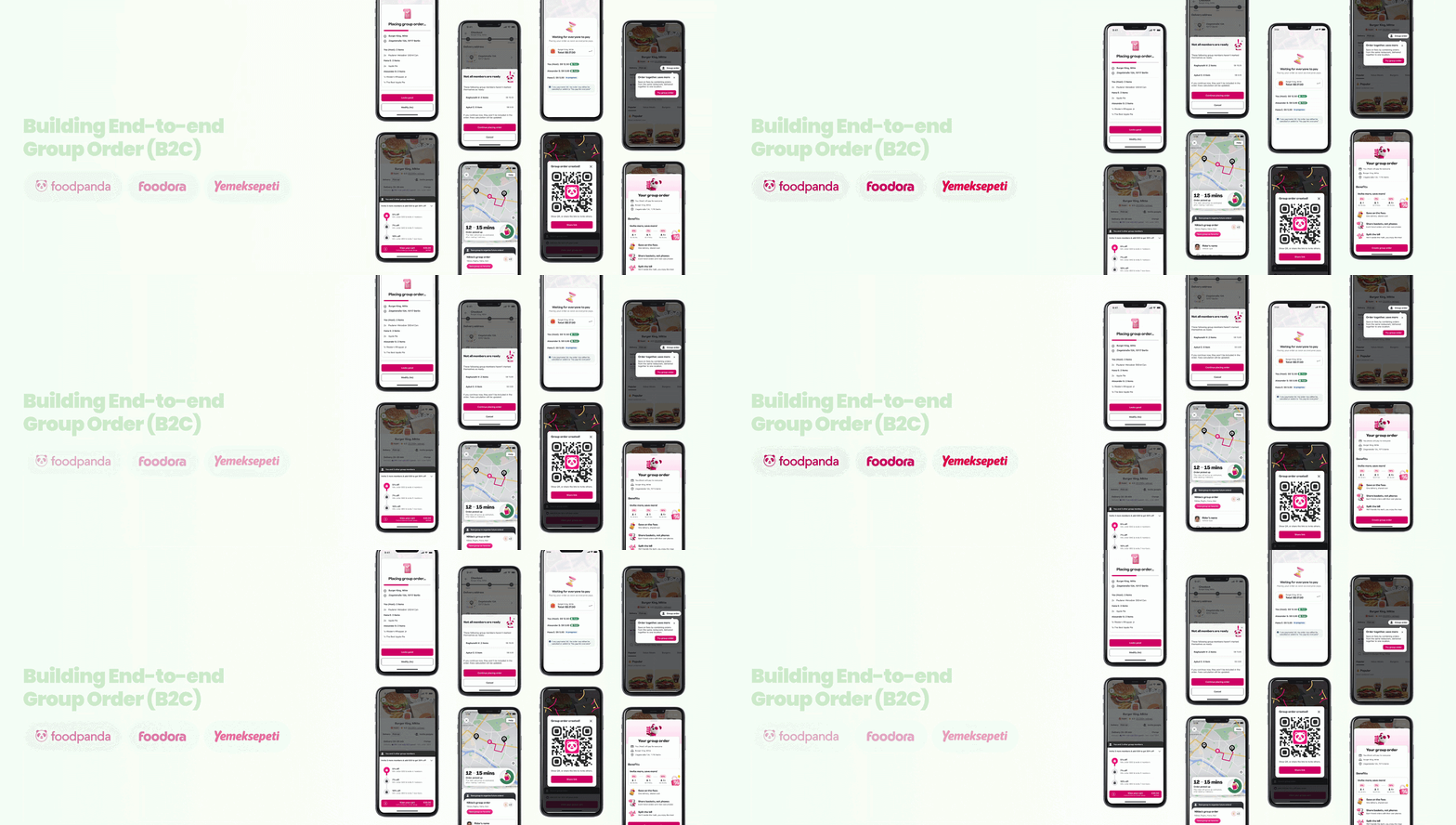
Building End-to-End Experience for Group Order (B2C)
ROLE
Designer, Researcher
TIMELINE
Aug 2025 - now
TOOLS
Figma, Figjam, Lyssna
IMPACT
-
Successfully launched Foodpanda’s first B2C Group Order across 19 markets.
-
Achieved 13K+ orders, €280K+ GMV, and 4.4K collaborative orders during the first month staged rollout (10% iOS, followed by 10% Android).
PROJECTED IMPACT
-
Moderate estimate of €32.5M and an aggressive scenario of €59.1M annually.
foodpanda operates in 19 markets in Asia (Singapore, Hongkong, Thailand, Malaysia, Pakistan, Taiwan, Philippines, Bangladesh, Laos, Cambodia, 8 , Europe (Austria, Czechia, Denmark, Finland, Hungary, Norway, Slovakia & Sweden) and Turkey.
BACKGROUND
Ordering food is usually a solo experience, but many real-life moments, like team lunches, family meals, or hangouts, are shared. Group Order makes it easy for everyone to order together in one flow.
USER GOAL
Enable consumers to coordinate shared orders without increasing social friction or cognitive load.
BUSINESS GOAL
Increasing AOV through shared baskets, unlocking B2C, driving organic acquisitions via invite-based participation.
USER RESEARCH
TARGET AUDIENCE
n = 8
-
Customers residing in Singapore
-
Familiar with Group Order; prior competitor usage
INTERVIEW OBJECTIVE
-
Uncover key motivations & reasons to use Group Order
-
Identify the highlights & value that Group Order brings
-
Identify pain points & frustrations regarding Group Order
OBSERVATION #1
88% (7/8) coordinated outside the app after creating a group order. Although users started inside Group Order, almost everyone switched to WhatsApp or Telegram to: -remind others to add items (7/8), check who had finished ordering (6/8), coordinate when to place the order (6/8)
OBSERVATION #2
62.5% (5/8) participants were unsure when Group Order should be used, some participants associated Group Order only with promo.
OBSERVATION #3
Challenges appear before, during, and after ordering: Deciding what to eat, aligning on choices, settling payments
How might we enable group order by reducing coordination uncertainty and making the behavior understandable?
To summarise:
1. How to design a system that supports multiple user interaction within one order with clarity / trust??
2. How to ensure users understand that Group Order exists, when to use it, how it works?
SCOPING & PRIORITIZATION

1: Allocating ideas based on Impact vs feasibility

2: Define the metrics for group order

3: Define confidence level on impacting metrics
When I did the scoping & prioritization, I included engineering, business, product, design team, and prioritized feature to develop first, based on the impact, engineering effort, and confidence level. Rather than shipping everything at once, we narrowed the MVP to the features most likely to improve adoption while keeping the time it takes for development realistic.
SERVICE BLUEPRINT MAPPING
Because Group Order involves multiple users acting asynchronously, I mapped the end-to-end service blueprint to uncover where the coordination broke down across hosts, guests, and the system (not just individual screens.)

DESIGN EXPLORATION - MVP
AWARENESS
ADOPTION
TRANSPARENCY
i. AWARENESS
THE PROBLEM
-
New users are 3x less likely to convert
-
+50% drop at Menu, +17% at Checkout
-
39% cite affordability perception as the main blocker
💭 “Fees feels high for just me”
💭 “Not sure if it’s worth ordering alone"
THE INSIGHTS
By the time users reach Cart:
-
Decision is already made -- “I’m ordering alone”
-
mental model is fixed
-
Switching to Group Order feels like extra effort
THE SOLUTION
Introduce Group Order on the upper funnel, where users still compare options, evaluate value, are open to alternatives.
👉 Introduce Group Order here to:
-
reframe affordability (split delivery cost)
-
reduce hesitation (shared decision)
EXPLORING WHERE GROUP ORDER SHOULD LIVE
I initially proposed surfacing Group Order across multiple upper-funnel entry points, including push notifications, homepage banners, shortcuts, and the restaurant detail page.
However, most of these options required either a dedicated Group Order landing page, support from other teams, or additional engineering effort. To keep the first release focused, we prioritised the restaurant detail page, where users already make ordering decisions and where the feature could be introduced with fewer dependencies.

Push notification 🚫
Useful but required a dedicated landing experience & could only reach users with notifications enabled (only 72% have it enabled)
Homepage banner 🚫
Good visibility, but depended on a dedicated landing page and coordination with the incentives team (+ banner blindness issue)
Homepage shortcut 🚫
High visibility entry point, but required additional homepage engineering support and alignment
Restaurant detail page
The lowest-effort & contextually relevant option for the MVP, with minimal dependency on other teams. (Approved by leadership)
CHALLENGING THE SCOPE
I was concerned that relying only on the restaurant detail page would limit awareness, as users would need to enter a restaurant before discovering Group Order. To strengthen the case for a homepage shortcut, I independently built an opportunity projection using existing shortcut traffic, click-through rates, and ordering behaviour.

The proposal was supported by leadership, but moved to the next iteration due to engineering effort and timeline constraints.
UNMODERATED USER VALIDATION

TARGET AUDIENCE
n = 90
-
Residing in Sweden & Singapore
-
Familiar with food delivery concept
RESEARCH METHODS
-
First-click test + Scenario
-
Follow-up Likert Scale
RESEARCH CONCLUSION
I proceeded with placement near delivery (1A) as it's perceived more relevant to the ordering context and better integrated into the decision-making flow.
-
Placement near the search bar (1B) had similarly high discoverability. However, users perceived it as less contextual to the task.
-
Header placement (1C) had low visibility and was often overlooked

HOW THE ANIMATION WORKS
I explored three possible ways to introduce the entry point while keeping the restaurant page visually balanced; I settled on Option 2.
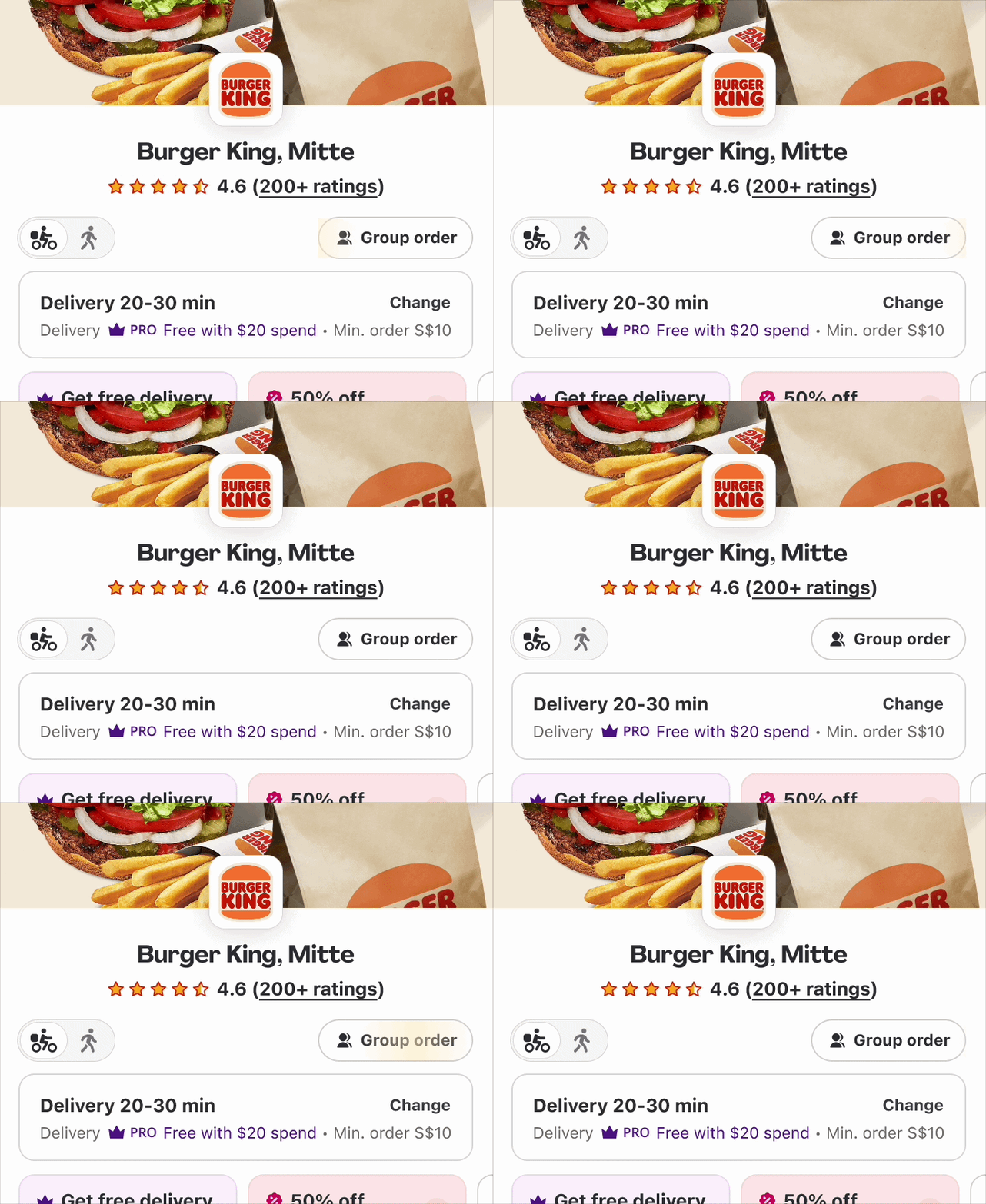
Option 1
Shimmer
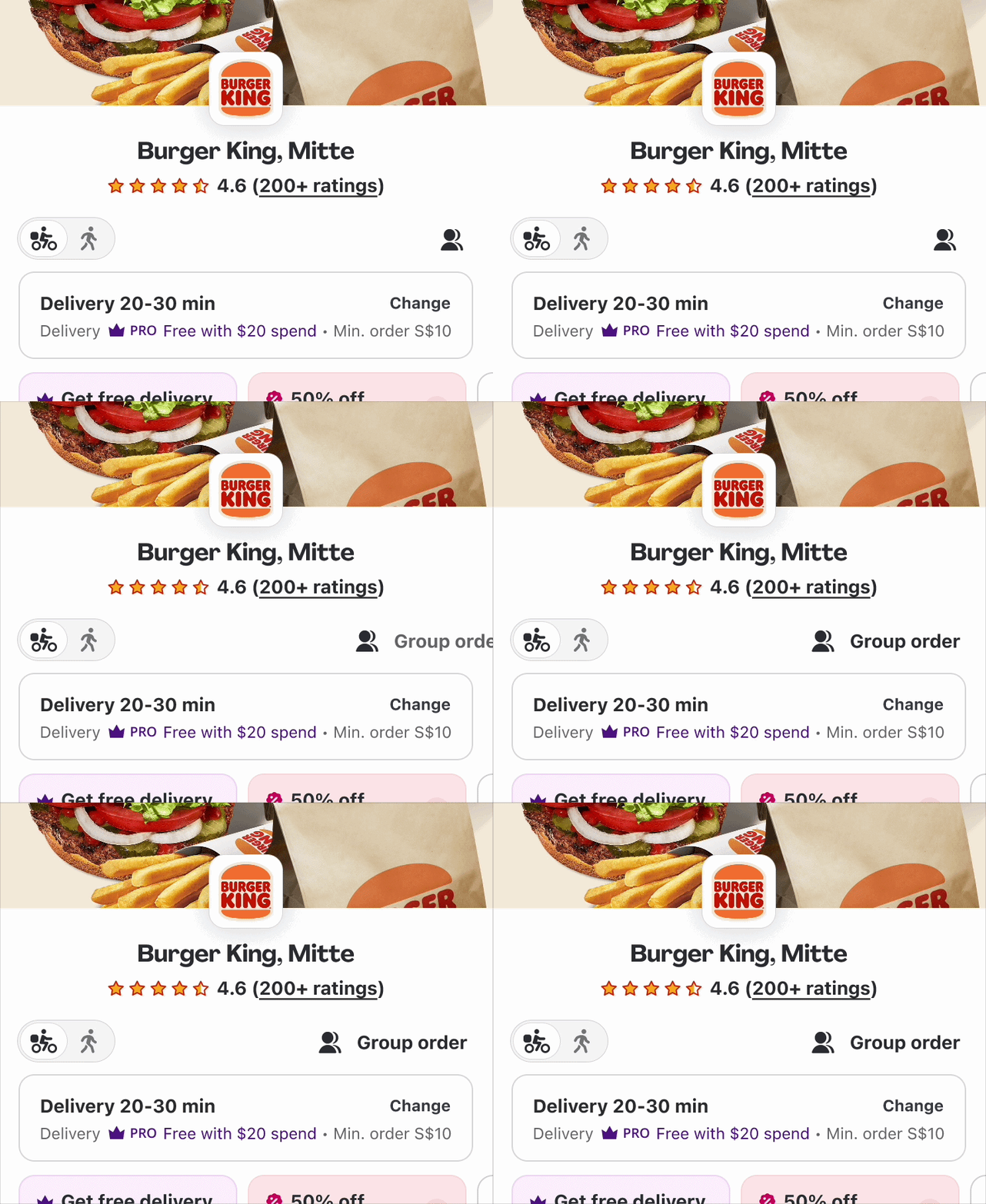
Option 2
Icon transitions into icon + text
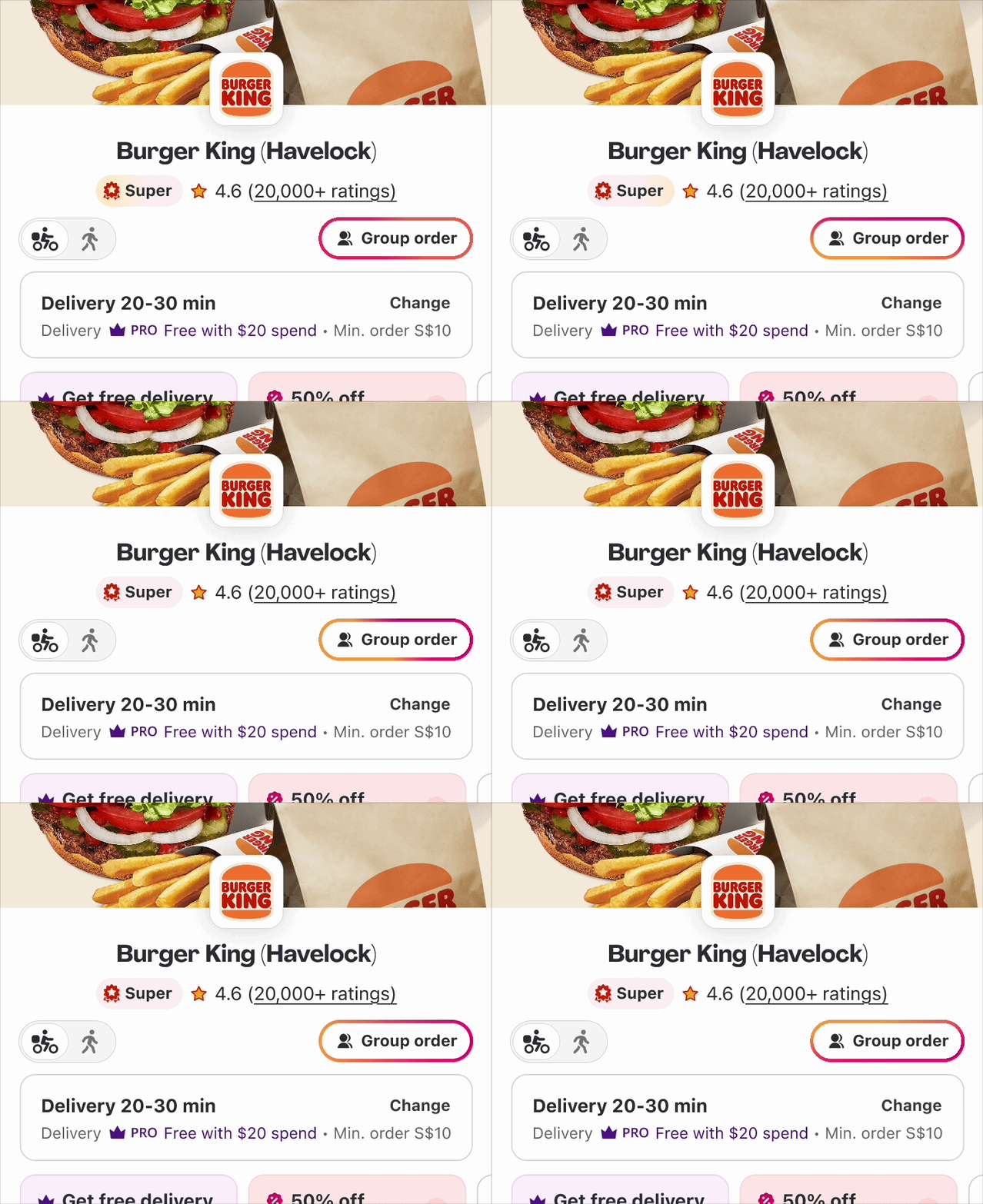
Option 3
Animated gradient border
🔴 Commitment step
Before creating a group order, I set expectation upfront by showing users a clear breakdown of: how the flow works, What their role is (host), What others can do
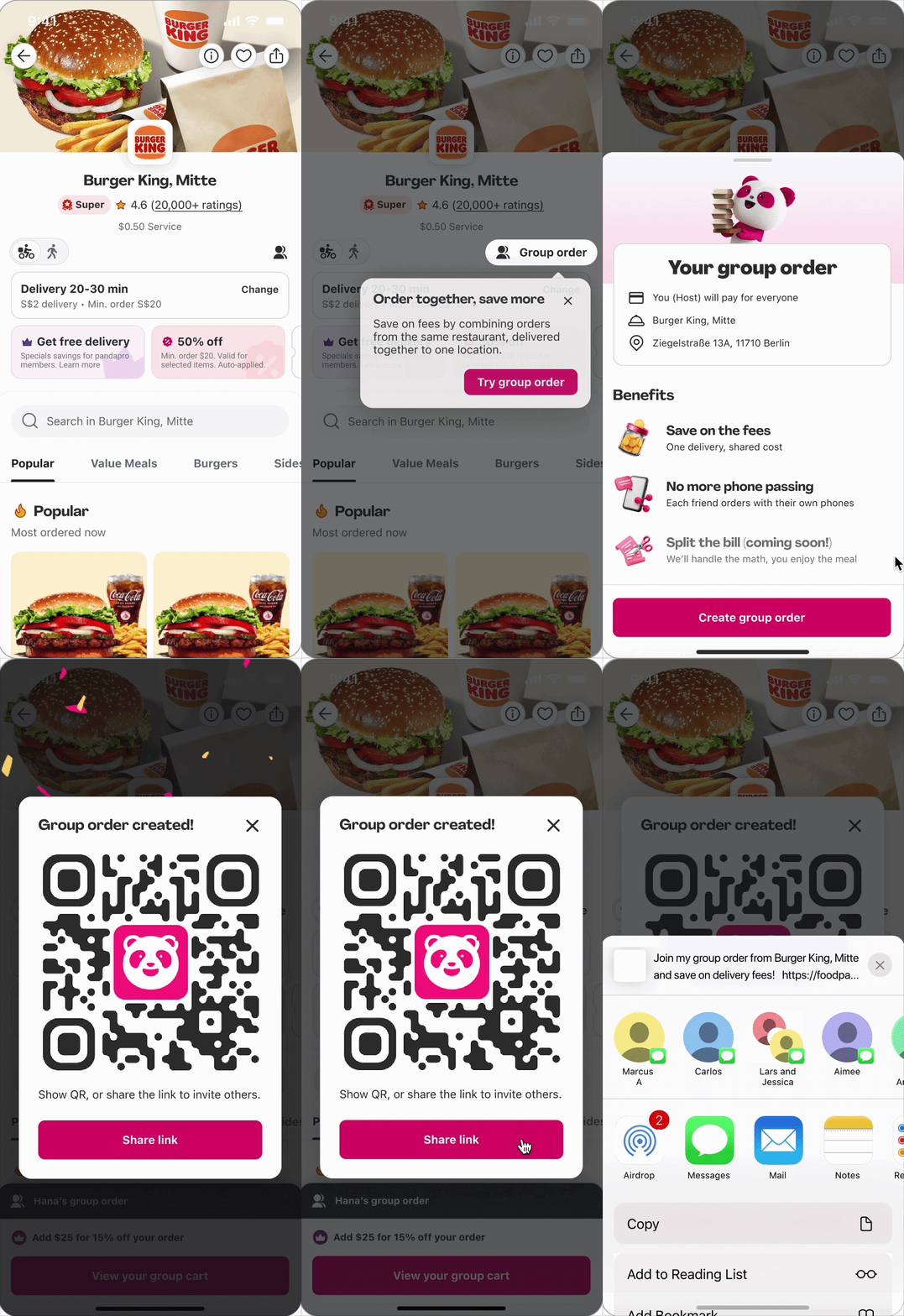

🟠 Nudge with value
A contextual nudge on how group order reduces delivery cost & coordination effort. This helps users understand: Why they should use it, when it is useful
🟣 Instant activation (Create -> Invite)
Once created, the system immediately shifts users into inviting others, using shareable link & QR code, minimizing drop-off between creation & participation.
ii. ADOPTION
iii. TRANSPARENCY
After a group order is created, the challenge shifts from onboarding to keeping multiple users aligned in real time. To support this, I introduced a persistent group status section that provides clarity on group order, and a banner that provides real-time update.
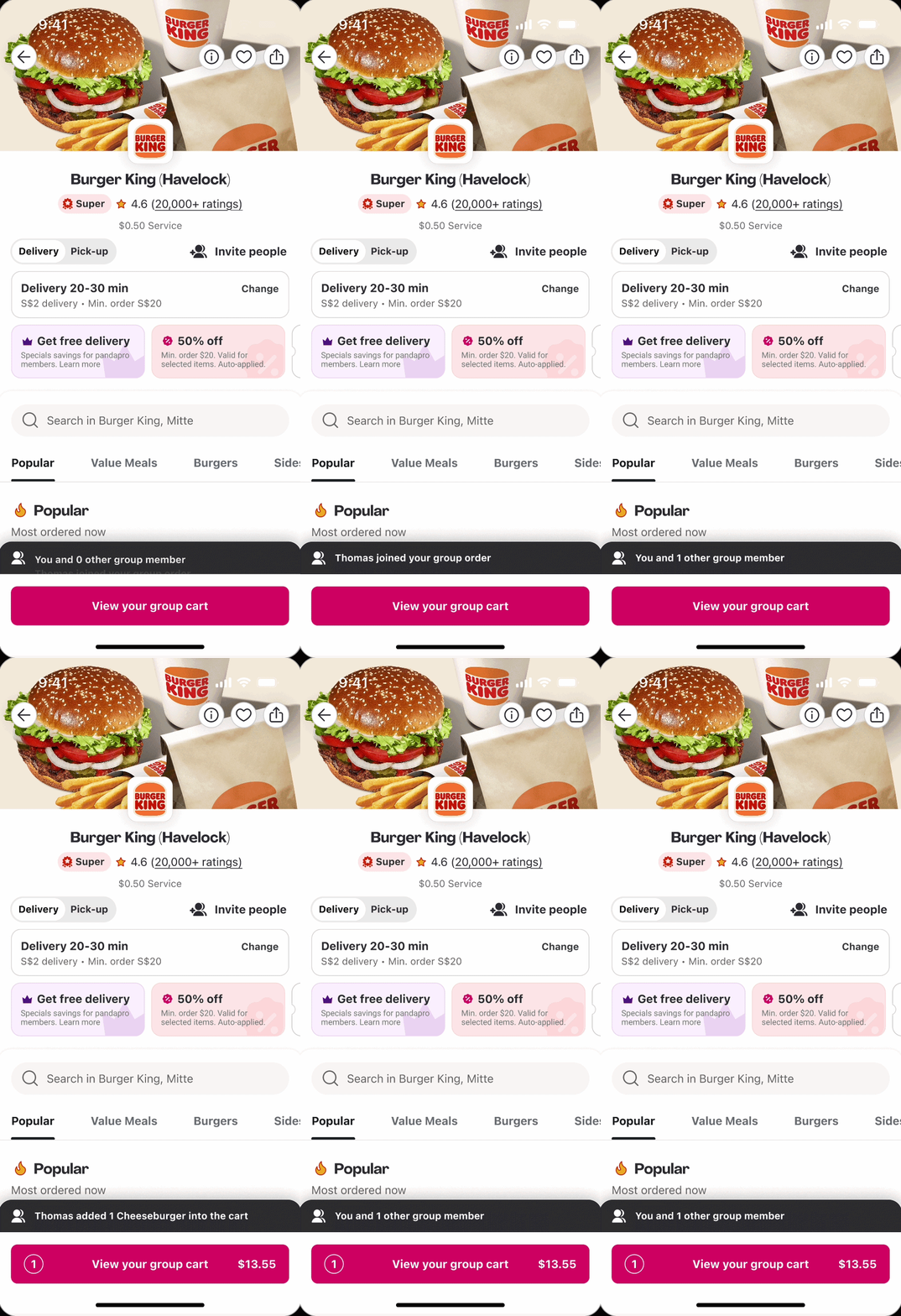

Real-time updates Banner
When someone joins, leaves, adds items
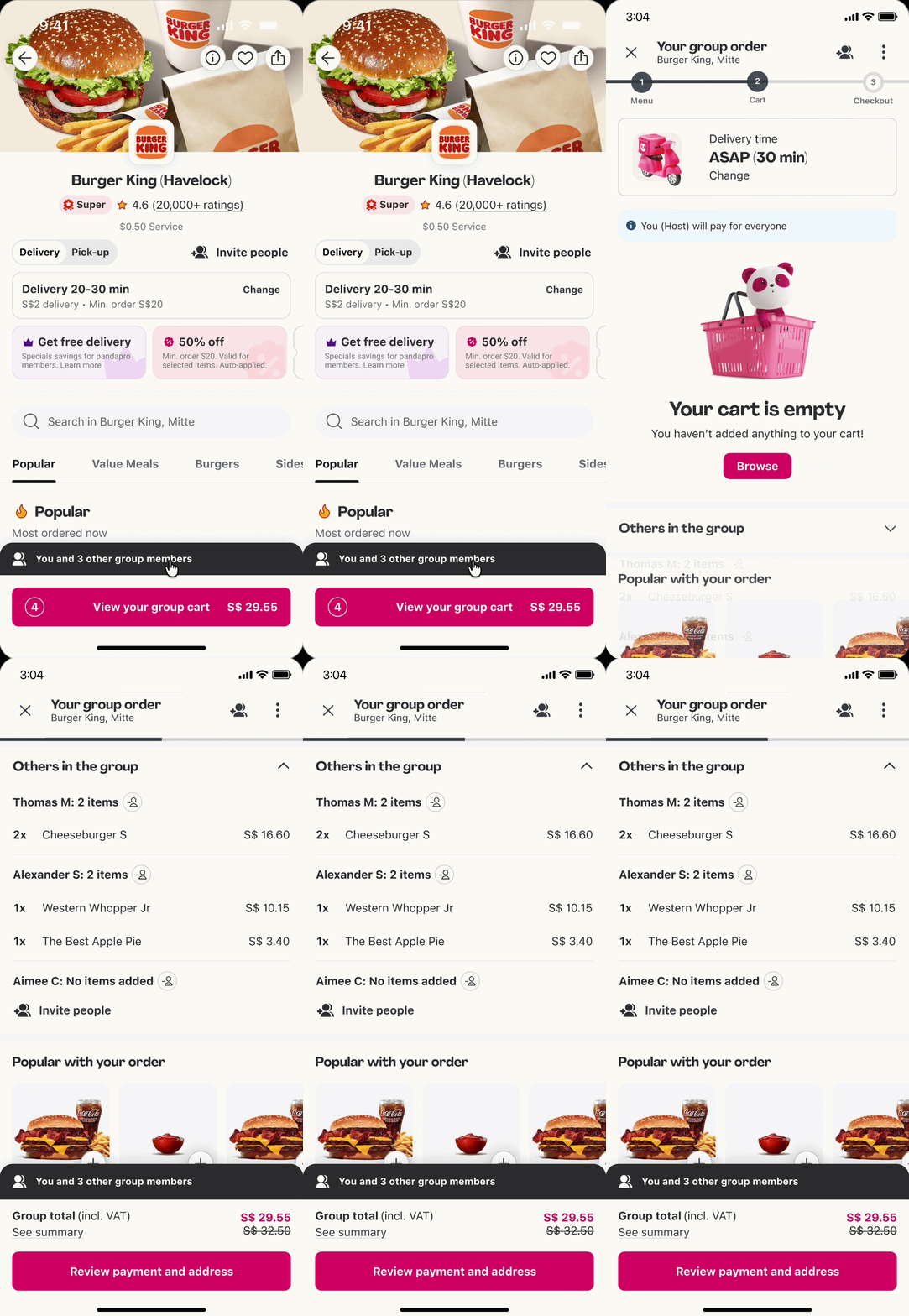
Banner that leads to Group order section
Full transparency of who's inside the group, who';s ordering what
POST-MVP DESIGNS
EXPERIMENT & VALIDATION
DESIGN IMPROVEMENT
NEXT STEPS
MVP Experiment
We experimented with launching the feature on a staggered rollout;
10% APAC - iOS
9 Jun
10% EU - iOS
23 Jun
50% APAC - iOS
9 Jul
10% EU & APAC - Android
16 Jul
MVP Validation
#1: In-person Beta testing
in the APAC office
#2: Moderated user interview across APAC & EU with a total of 12 participants
#3: Monitor the existing Group Order performance on Google Data Studio
i. IN-PERSON BETA TESTING
I collaborated with Branding team to make these posters + content on the Beta launch of Group Order. We displayed these promotional contents on the big screen on our Main office hall, our TV in the game area, our pantry, doors, and even on the refrigerators!


Apart from that, I also created a Slack channel for people to do group orders. I conducted this on a daily basis, and I managed to find issues -- I ccreated Jira tickets based on the issue I found out through guerrilla testing.

ii. MODERATED USER INTERVIEW
TARGET AUDIENCE
n = 12
-
6 APAC (3 🇸🇬 2 🇵🇭 1🇭🇰), 6 EUROPE (2 🇫🇮 1 🇦🇹 1 🇨🇿)
-
Users who have placed Group order
INTERVIEW METHOD
-
Existing performance evaluation
-
Follow-up Questions on Improvements
INSIGHTS
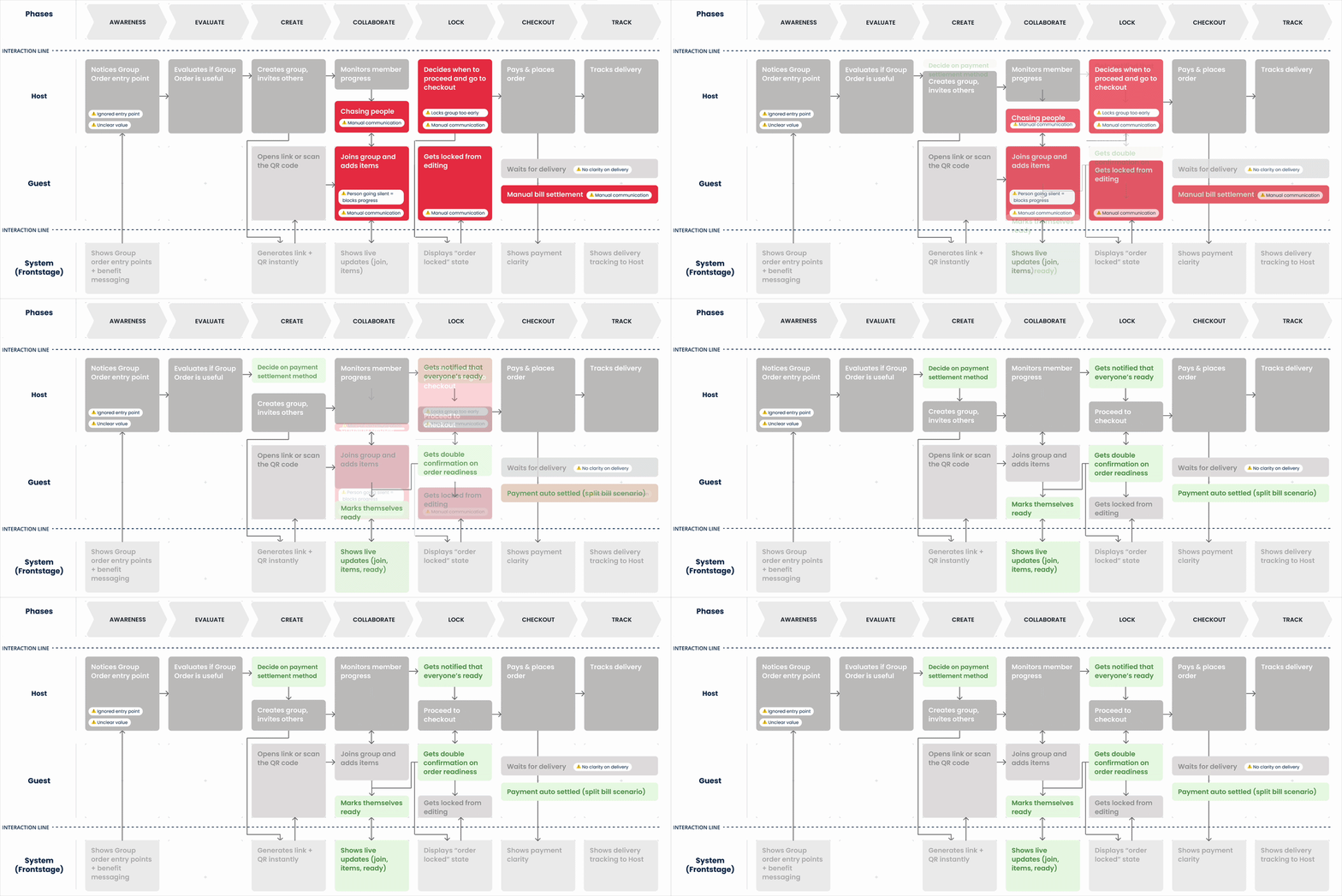
There were some patterns that happened in all of the participants on the reliance on manual communication, specifically in these three cases:
-
On ordering cutoff: the need for a clear signal of readiness
-
On bill settlements: the need to not have to manually calculate and pay host afterwards
-
On order tracking: the need for guests to track where the order is
The interviews revealed that users biggest friction wasn’t creating a group, it was coordinating payment. This shifted our roadmap, making Split payment the highest priority initiative for the next iteration of group order.
ENABLING SPLIT PAYMENTS
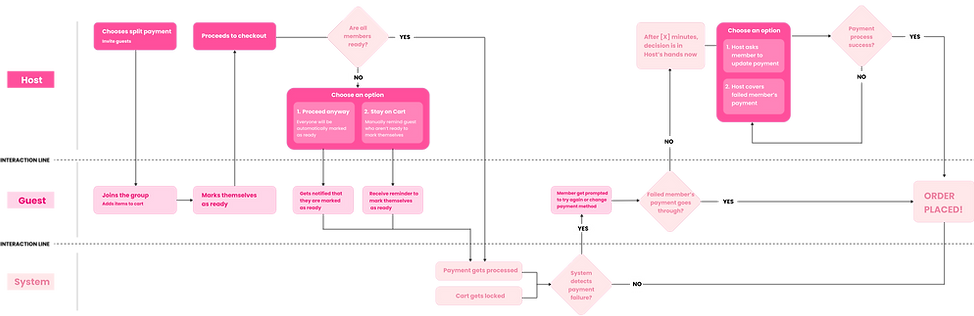
Split payment introduces a flow where Host, Guest, and the System/Platform continuously coordinate with one another. The challenge now wasn’t just splitting the payments, but it was ensuring the order could still progress when members weren’t ready or when the payments failed.
HOST

Chooses how to pay when creating the group order
GUEST
Prompted to add a digital payment prior to joining the group
HOST
Places the order once all the payment are processed

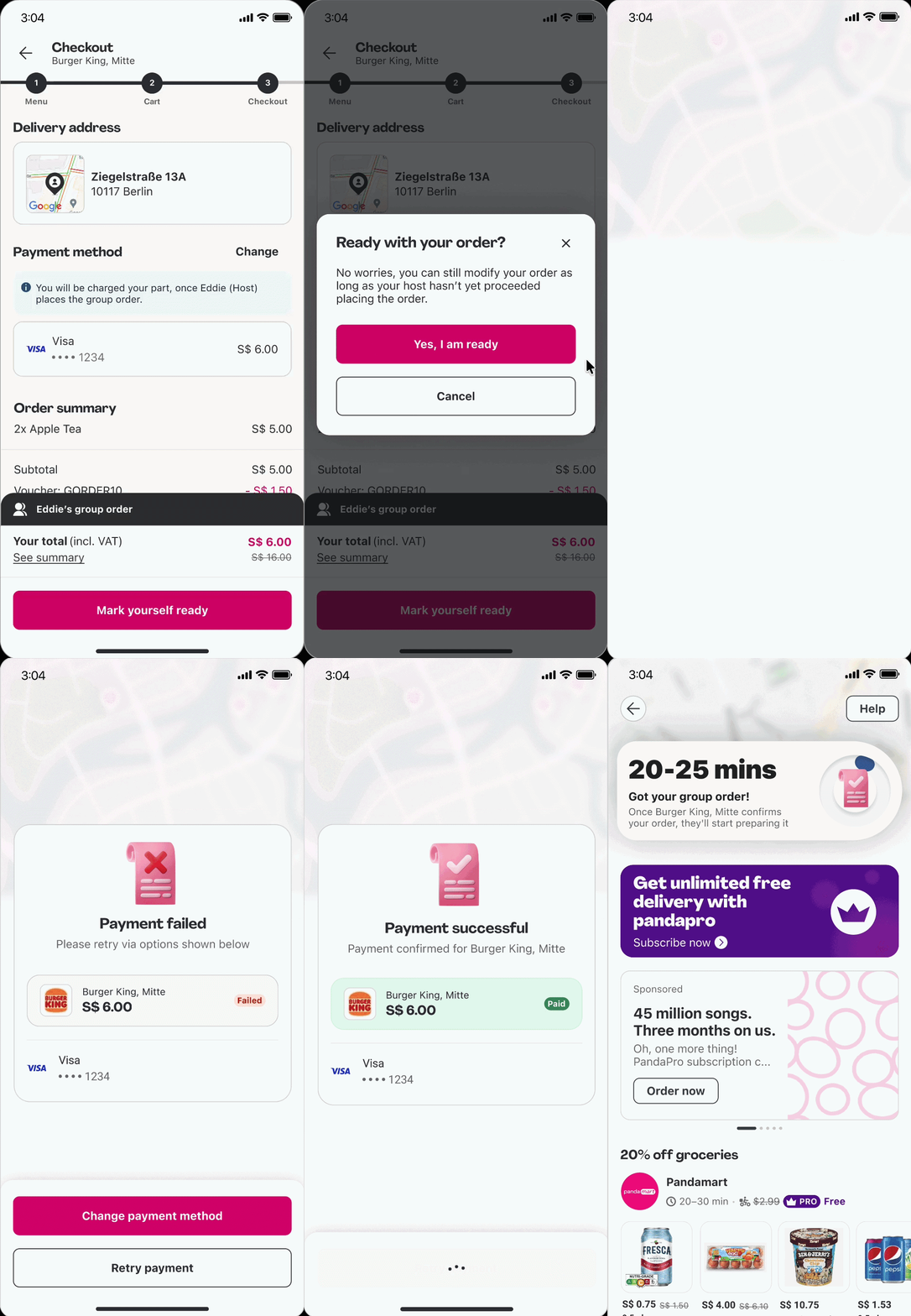
GUEST
Marks themselves ready and waits for the payment to go through once host checks out
HOST
Decides what to do after [X] minutes of guest payment failure


GUEST
Waits for Host to decide on resolution after [X] minutes of payment failure

iii. MONITOR DATA (1 Jul - 14 Jul 2026)

Insights: Many users are exploring Group Order alone. 67.3% = 1 participant | 22.8% = 2 participants | 5.9% = 3 participants
Hypothesis: Early adoption showed that while users were interested in trying group order, the majority didn't progress into collaborative ordering. This highlighted onboarding and invitation as the primary opportunity rather than checkout itself.
How might we motivate users to turn solo Group Orders into shared Group Orders by increasing the value of inviting others?
.png)
Banner upon seeing group order
As part of benefits page, we show tiered incentives (Invite more, save more!)

Constant reminder
Above the CTA, we show the perks they'll get plus a progress bar on their progression

Bottomsheet on tiers
Upon clicking on the deal, they can clearly see all the tiers and how to unlock them.
IMPACT
-
Validated a new product opportunity
Launched Foodpanda’s first B2C Group Order across 19 markets, proving that collaborative ordering could extend beyond corporate use cases. -
Generated early business value
Achieved 13K+ orders, €280K+ GMV, and 4.4K collaborative orders during the first staged rollout despite limited market exposure (10% iOS, followed by 10% Android).. -
Shaped the next improvement
Launch data (last 14d) showed that 65% of users completed Group Orders alone, and it shows that discoverability wasn’t the primary challenge but participation was. This shifted the roadmap toward incentives, Split Payment, and reducing coordination friction in general
NEXT STEPS
-
Track long-term retention and group size distribution after launch.
-
Launch Incentives to encourage people inviting more
-
Launch Homepage Shortcut to improve feature discoverability.
-
Launch Split Payment to remove the need for the host to cover everyone’s order.